


My Bloody Valentine - Loveless
My Bloody Valentine’s definitive masterpiece and one of the most influential albums in alternative music, reshaping the possibilities of guitar sound, texture, volume, melody, and studio production.
Style: Shoegaze, dream pop, noise pop, alternative rock, experimental rock
Loveless is the sound of the electric guitar losing its edges and becoming weather. Released in 1991, My Bloody Valentine’s second studio album is one of the most extraordinary records of its era: immersive, disorientating, sensual, overwhelming, and strangely weightless despite its immense volume. It took the noise-pop and dreamlike textures of the band’s earlier work and pushed them into a new realm, creating an album where distortion becomes atmosphere, melody seems to float inside turbulence, and rock music begins to behave like a physical environment.
Before Loveless, My Bloody Valentine had already developed a distinctive place in British and Irish alternative music. The group, led by Kevin Shields with Bilinda Butcher, Colm Ó Cíosóig, and Debbie Googe, moved through several early phases before arriving at the sound that would define them. Their 1988 album Isn’t Anything was a major breakthrough, combining jagged noise, hazy vocals, unusual tunings, and blurred pop forms into something that felt genuinely new. But Loveless went much further. It did not simply refine the shoegaze sound; it became the record against which much of the genre would be measured.
The album’s creation has become part of its mythology. Recorded over a long, difficult, and expensive period in multiple studios, Loveless is inseparable from Kevin Shields’s obsessive approach to sound. Shields used glide guitar techniques, alternate tunings, tremolo-arm movement, sampling, extreme volume, and meticulous layering to create textures that seemed to bend, smear, and breathe. The guitar on Loveless often does not sound like guitar in the ordinary rock sense. It sounds like waves, engines, voices, wind, light, pressure, and memory.
Yet the album’s reputation as a sonic landmark can sometimes obscure how melodic it is. Beneath the distortion are songs of remarkable beauty and clarity. My Bloody Valentine’s genius was not simply to make noise, but to make noise sing. The vocals of Shields and Bilinda Butcher are often buried inside the mix, not because they are unimportant, but because they function as part of the overall texture. Their voices are intimate and distant at once, like thoughts half-heard through a wall. The lyrics are often indistinct, but the emotional tone is unmistakable: desire, drift, tenderness, confusion, and dreamlike longing.
The album opens with “Only Shallow,” one of the great opening tracks in alternative rock. Colm Ó Cíosóig’s drum hit launches the song into a wall of guitar that feels both violent and soft, a rushing force without a hard centre. Bilinda Butcher’s vocal floats calmly above the turbulence, creating the album’s central contrast immediately. The guitars seem to surge and fold around her voice rather than simply accompany it. As an introduction to Loveless, “Only Shallow” is perfect: overwhelming, beautiful, physical, and disorientating.
“Loomer” follows in a darker, more submerged mood. Its guitar textures are thick and woozy, moving with a slow, bending pressure that feels almost seasick. The song seems to hover rather than progress, creating the impression of being suspended inside sound. Butcher’s voice is soft and distant, less a lead vocal than a human presence inside the haze. The track deepens the album’s atmosphere, proving that My Bloody Valentine’s intensity is not always about speed or volume. Sometimes it is about pressure, density, and drift.
“Touched” is a brief instrumental interlude created by Colm Ó Cíosóig, and it plays an important role in the album’s architecture. With its warped, almost orchestral texture, it feels like a fragment from a dream or film score. It breaks the expected flow of guitar rock and reinforces the idea that Loveless is not a conventional band album. It is a sequence of environments, transitions, and sensations. Even its smallest pieces contribute to the larger atmosphere.
“To Here Knows When” is one of the album’s most radical tracks. Originally released on the Tremolo EP, it remains one of My Bloody Valentine’s most extraordinary achievements: a song that seems to dissolve as it plays. The rhythm is blurred, the vocals are ghostly, and the guitars shimmer in waves that feel almost impossible to locate. It is pop music reduced to sensation and memory, with melody present but softened into mist. The track captures the album’s ability to make sound feel physical and unreal at the same time.
“When You Sleep” is one of the album’s most immediately memorable songs, with a melody that rises through the dense guitar layers like a half-remembered chorus from a dream. Shields’s vocal is androgynous and indistinct, blending into the instrumentation until voice and guitar seem to share the same substance. The song’s emotional force comes from this uncertainty. It feels romantic, but not straightforwardly so; intimate, but blurred; euphoric, but slightly unstable. It is one of the clearest examples of Loveless turning pop melody into something hallucinatory.
“I Only Said” is heavier and more narcotic, built around a repeating guitar figure that seems to bend in and out of focus. The song has a circular quality, with rhythm and texture creating a hypnotic pull. Shields’s voice is buried within the mix, and the guitars create an almost metallic haze around him. Like much of the album, the track seems to reject the normal hierarchy of rock recording. The vocal is not placed above the music as the main point of attention. Everything is part of the same field.
“Come in Alone” brings a warmer, more melodic atmosphere while retaining the album’s dense production. The guitars move with a glowing, blurred force, and the song’s structure feels closer to conventional alternative rock than some of the more abstract pieces. But even here, the sound is unmistakably My Bloody Valentine. The edges are softened, the tuning feels unstable, and the voice is treated as a texture within the whole. The song’s beauty lies in how it makes distortion feel luminous rather than aggressive.
“Sometimes” is one of the album’s emotional centres and one of its most beloved tracks. Built around thick acoustic-electric guitar textures and a deeply buried Kevin Shields vocal, it is slow, enveloping, and profoundly moving. The song feels private, as if recorded inside the listener’s own head. Its chords have a heavy, melancholy warmth, and its melody emerges gradually through the haze. “Sometimes” is often one of the tracks that reveals the heart of Loveless: beneath the sonic experimentation is an aching emotional clarity.
The power of “Sometimes” lies in its intimacy. It is not intimate in the usual singer-songwriter sense, where words and voice are presented nakedly at the front. It is intimate because it feels internal. The listener is surrounded by sound rather than addressed directly. The song seems to capture the blurred emotional state between memory and dream, where feelings are vivid but language is indistinct. It is one of the great examples of shoegaze as emotional architecture.
“Blown a Wish” is one of Bilinda Butcher’s most beautiful performances. The track is lighter, sweeter, and more openly dream-pop in tone, though still filtered through the album’s soft-focus distortion. Butcher’s voice gives the song a delicate, floating quality, while the guitars shimmer around her with extraordinary restraint. After the weight of “Sometimes,” it provides a moment of air and tenderness. It is one of the album’s clearest reminders that My Bloody Valentine’s sound is not only overwhelming; it can also be fragile and graceful.
“What You Want” returns to a more driving pulse, combining rhythm, noise, and melody in a way that feels both propulsive and blurred. The track has a restless energy, but the mix keeps it from becoming straightforward rock. The guitars smear across the rhythm, the vocals drift in and out, and the song feels as though it is constantly moving forward while also dissolving at the edges. This tension between drive and dissolution is one of the album’s defining qualities.
The album closes with “Soon,” one of My Bloody Valentine’s greatest and most influential songs. Originally released on the Glider EP, it brings a dance-influenced rhythm into the band’s world of guitar haze, creating a track that points toward the overlap between shoegaze, indie, electronic music, and club culture. The groove is steady and physical, while the guitars create a vast, shimmering surface above it. Butcher’s vocal is soft and detached, giving the song a cool, hypnotic centre.
“Soon” is a perfect closing track because it opens the album outward. After so much internal drift and blurred emotion, the rhythm suggests movement, release, and expansion. It is not dance music in a straightforward sense, but it understands repetition, groove, and bodily immersion. Its influence can be heard across shoegaze, alternative dance, electronic rock, and later experimental pop. As a finale, it does not resolve Loveless so much as leave it shimmering into the future.
In My Bloody Valentine’s discography, Loveless occupies a legendary position. It followed the breakthrough of Isn’t Anything and the extraordinary run of EPs that included You Made Me Realise, Glider, and Tremolo. After Loveless, the band’s long silence only increased the album’s mythic status. Their eventual return with m b v in 2013 confirmed how singular their language remained, but Loveless continues to stand as the central monument: the record where their ideas reached their most complete and influential form.
The album’s importance in the wider world of music is enormous. It became the defining shoegaze album for many listeners, but its influence extends far beyond that label. Alternative rock, dream pop, ambient music, noise pop, post-rock, electronic music, experimental pop, and even metal have all absorbed parts of its approach to texture, volume, and immersion. It changed how bands thought about guitar. The instrument no longer had to be riff, chord, solo, or rhythm part. It could be a cloud, a wave, a machine, a choir, or a weather system.
One of the most radical things about Loveless is its treatment of volume. It is a famously loud album, yet its loudness is not simply aggressive. The sound often feels soft-edged, enveloping, and almost tactile. This contradiction is central to its beauty. My Bloody Valentine make distortion feel sensual. The noise does not push the listener away; it pulls the listener inside. The album is heavy, but not in the same way as metal or hard rock. Its heaviness is atmospheric and physical, a pressure that surrounds rather than strikes.
Kevin Shields’s production is central to this effect. His use of tremolo-arm bending while strumming chords created the signature “glide guitar” sound, where pitch seems to sway and melt. Combined with unusual tunings, layered tracks, sampled guitar textures, and painstaking mixing, this technique gave Loveless its unmistakable movement. The album’s sound is unstable in the most carefully controlled way. It feels like it might melt, but every blur has been shaped.
Bilinda Butcher’s role is equally essential. Her vocals provide much of the album’s dreamlike emotional quality, and her presence helps define the balance between force and softness. She does not compete with the guitars; she becomes part of their atmosphere. This is not a weakness of the mix, but one of its most important artistic decisions. The voice on Loveless often feels like memory itself: present, human, and unreachable.
Colm Ó Cíosóig’s drumming and programming also play a crucial part, though the album’s production history means rhythm is often transformed and recontextualised. The drums are not always presented in a natural rock-band way. Sometimes they feel sampled, looped, processed, or submerged, contributing to the album’s sense that performance and studio construction are inseparable. Debbie Googe’s bass presence, though often less foregrounded than in a conventional rock mix, contributes to the low-end weight and physicality of the band’s sound.
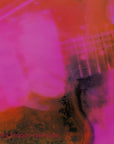
The cover artwork is one of the most recognisable images associated with shoegaze. Its blurred, pink-toned image of a guitar perfectly captures the album’s visual and sonic identity. The instrument is present but indistinct, recognisable but transformed into colour and texture. Like the music, the image turns rock’s most familiar object into something abstract, sensual, and strange. It is an ideal sleeve: simple, iconic, and inseparable from the sound inside.
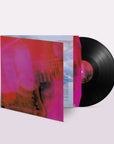
For collectors, Loveless is indispensable. It is one of the essential albums of the 1990s, one of the defining Creation Records releases, and a cornerstone title for anyone interested in shoegaze, alternative rock, dream pop, noise pop, or experimental guitar music. Original pressings, Creation editions, later remasters, deluxe versions, and analogue-cut reissues all carry strong interest because the album’s sonic detail and production history make format and mastering especially important to listeners.
More than three decades after its release, Loveless still feels futuristic. Many guitar records from the early 1990s are tied closely to their era, but Loveless continues to sound as if it exists outside normal chronology. “Only Shallow” still overwhelms from the first impact. “To Here Knows When” still seems to dissolve in mid-air. “When You Sleep” still glows with dreamlike melody. “Sometimes” still feels devastatingly internal. “Soon” still points toward a future where rock, electronic rhythm, noise, and atmosphere can merge.
Loveless is My Bloody Valentine at their most visionary: a record where guitar music is rebuilt as texture, sensation, and emotional weather. From the opening rush of “Only Shallow” to the hypnotic forward motion of “Soon,” it remains one of the defining albums of alternative music — beautiful, overwhelming, mysterious, and absolutely essential.
Key highlights
Artist: My Bloody Valentine
Title: Loveless
Originally released: 1991
Label: Creation Records
Producer: Kevin Shields
Key tracks: “Only Shallow,” “To Here Knows When,” “When You Sleep,” “I Only Said,” “Sometimes,” “Blown a Wish,” “Soon”
We collect EU VAT on orders under €150. This means EU customers should not incur additional customs duties. Please note that orders over €150 are not covered by this and may be subject to customs charges.
Orders placed before 2 pm are usually shipped the same day.
All orders are fulfilled from our London warehouse, with daily collections by Royal Mail on weekdays.
Orders shipped with DHL go out Tuesdays, Thursdays and Fridays.


